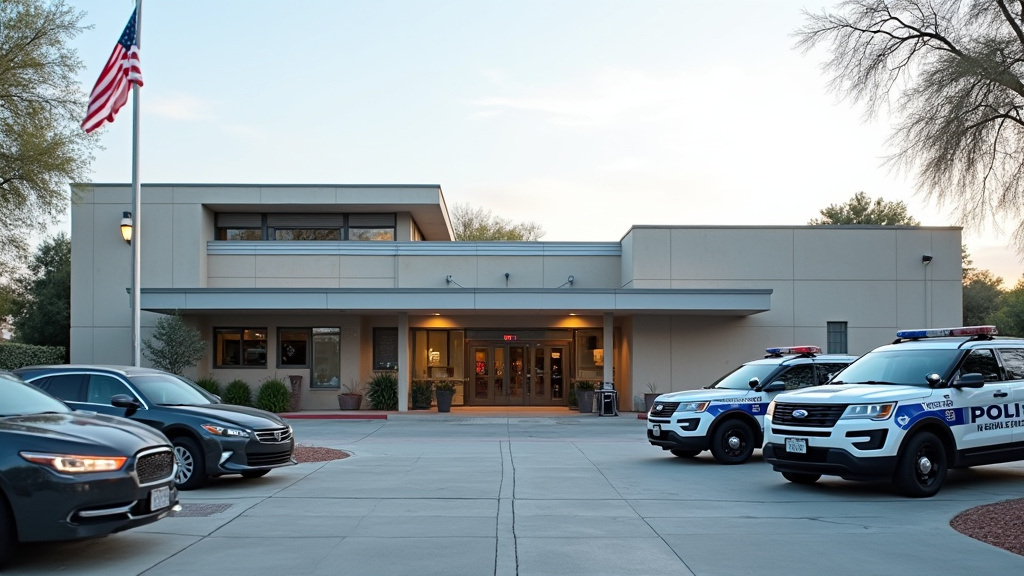
The Chicago Police Department (CPD) has officially burned through its entire annual overtime budget with three months still remaining in the fiscal year. According to the latest data from the office of Chicago Inspector General Deborah Witzburg, the department has spent a staggering $224.4 million on overtime pay within the first nine months of the year. This expenditure represents a 12% overrun of the total annual allocation, underscoring a systemic and persistent crisis in how the city manages its largest municipal expense. The figures, which highlight a decade-long trend of budget mismanagement, place immense pressure on City Hall to reconcile operational needs with fiscal reality.
The Architecture of the Overrun
At the core of the issue is a fundamental disconnect between the CPD’s budgetary planning and its daily operational execution. The $224.4 million figure is not merely a statistical anomaly; it is a symptom of a department that has become structurally reliant on overtime to maintain basic service levels. When the city council approves the annual budget, it sets an overtime cap—a “spending ceiling” intended to manage costs while ensuring public safety coverage. The fact that the department has breached this ceiling by 12% in three-quarters of the year indicates that either the budget projections are fundamentally flawed or the operational deployment strategy is incapable of functioning within approved financial parameters.
Historically, the CPD has faced this exact cycle for over a decade. Every year, budget discussions occur, overtime caps are established, and every year, the department requires emergency supplementary funding or internal budgetary maneuvering to cover the shortfall. This recurring pattern suggests that the overtime budget is viewed more as a suggestion rather than a binding constraint.
A Decade of Fiscal Volatility
To understand why this figure is so significant, one must look at the historical context. For the better part of the last ten years, the CPD’s reliance on overtime has been the single most consistent “budget buster” in Chicago’s municipal finance portfolio. Unlike other departments where budget variances might be explained by unforeseen emergencies or one-time events, the CPD overtime issue is a “chronic” condition.




Analysts point to several factors that have solidified this trend. First is the “staffing cliff.” As the department has seen attrition rates climb due to retirements, transfers, and resignations, the remaining headcount is insufficient to cover the city’s vast geographic footprint. To fill the gaps on the beat, the department mandates overtime. Second is the “proactive enforcement” requirement—the need to surge officers into specific neighborhoods during times of increased violence. When these surges are required, the department rarely has the flexibility to move personnel from administrative roles, forcing them to pay premium rates to bring officers in on their off days.
Secondary Angle: The Staffing Paradox
The most pressing secondary issue is the correlation between low staffing and high overtime costs. It creates a perverse economic incentive: the more vacancies the department faces, the more overtime it must pay to fill those shifts. This creates a financial loop where the savings from unfilled vacant positions are largely eaten up by the premium pay required to cover those very same vacancies. In many instances, an officer working overtime at “time-and-a-half” is significantly more expensive for the city than hiring a new recruit or retaining an existing officer at a standard salary, but the long lead time required for hiring and training means the department remains trapped in the short-term solution of paying for overtime.
Secondary Angle: The Operational Cost of Public Safety
The debate over the $224.4 million figure also forces a discussion on the economic impact. Every dollar diverted to overtime is a dollar that cannot be invested in other municipal services, such as community-based violence prevention programs, mental health initiatives, or infrastructure improvements. Critics of the current budgetary approach argue that the city is prioritizing a reactive, force-heavy model of public safety that comes at an unsustainable premium. They contend that by failing to solve the vacancy crisis, the city is effectively locking itself into a permanent state of fiscal emergency where the budget is dictated by the immediate demands of the street rather than long-term strategic planning.
Secondary Angle: Future Reform and Oversight
Looking toward the future, the Inspector General’s report is likely to reignite debates over “operational oversight.” There is growing pressure for the CPD to implement a more robust auditing system for overtime allocation. Currently, many overtime hours are generated by “mandatory holdovers,” where officers are forced to stay past their shift end time due to delays in processing arrests or responding to calls. Improving the efficiency of the arrest process and judicial processing could theoretically lower the number of hours officers spend off the street and on the clock. Without significant structural reform in how officers are deployed and how the CPD manages its “manpower vs. dollars” equation, experts predict that the 12% overage seen this year will simply be the baseline for the next fiscal cycle.
FAQ: People Also Ask
Q: Why does the Chicago Police Department consistently exceed its overtime budget?
A: The primary drivers are high attrition rates, understaffing, and the operational necessity to fill vacancies to maintain minimum shift coverage. The current staffing model requires premium-pay overtime to sustain operations, creating a cycle that consistently exceeds annual budgetary caps.
Q: How does the $224.4M in overtime spending impact Chicago taxpayers?
A: The cost is ultimately borne by the municipal budget, which limits the funds available for other city services. Because the police budget is a major component of the city’s total expenditures, persistent overruns often necessitate mid-year budgetary reallocations, which can affect funding for other departments.
Q: What has the Inspector General recommended to solve this issue?
A: While the specific current report focuses on the numbers, the Inspector General’s office has historically urged the city to improve data-driven deployment, address the root causes of understaffing, and implement stricter controls on overtime authorization to ensure that every dollar spent is operationally necessary rather than administratively convenient.
Q: Is the 12% overtime overrun a new development?
A: No. According to the data, this is part of a decade-long trend where the CPD has routinely surpassed its allocated overtime budget, suggesting that the department’s reliance on overtime is a chronic fiscal issue rather than an isolated incident caused by a single year’s events.