US President Donald Trump and Iranian Foreign Minister Abbas Araghchi have formally confirmed a two-week ceasefire, a significant diplomatic breakthrough brokered by Pakistan following weeks of escalating regional warfare. The agreement, which took effect immediately, marks a pivotal moment in the ongoing conflict, suspending U.S. military strikes and Iranian defensive responses. The truce is explicitly tied to the reopening of the Strait of Hormuz—the world’s most critical maritime oil chokepoint—and serves as a foundation for upcoming peace negotiations scheduled to commence in Islamabad. This high-stakes deal arrives just hours before the expiration of a deadline set by the White House, successfully averting further military escalation that threatened to draw the region into a broader, more destructive conflict.
Key Highlights
- Immediate Truce: Both the United States and Iran have agreed to a 14-day ceasefire to allow for diplomatic talks, effectively suspending kinetic operations.
- Strait of Hormuz Reopened: As a core condition of the deal, Iran has agreed to facilitate safe passage for global shipping traffic through the Strait of Hormuz.
- Mediated Diplomacy: Pakistan, acting as the primary intermediary, has invited delegations from both nations to Islamabad for high-level discussions starting Friday, April 10.
- 10-Point Proposal: The ceasefire is supported by a 10-point peace plan submitted by Tehran, which President Trump described as a ‘workable basis’ for further negotiations.
The Path to the Ceasefire: Diplomacy Under Pressure
The road to this two-week ceasefire was fraught with volatility. In the days leading up to the agreement, President Donald Trump had issued stern warnings, suggesting that the window for a peaceful resolution was closing. The rhetoric culminated in an ultimatum, with the President warning that failure to secure the Strait of Hormuz would result in a significant shift in U.S. military posture. This posture, which involved the mobilization of naval assets and the threat of severe strikes on Iranian infrastructure, placed the Middle East on a knife’s edge.
Behind the scenes, however, intense diplomatic efforts were underway. Pakistan, leveraging its strategic position and unique relationship with both Tehran and Washington, stepped in as a crucial mediator. Prime Minister Shehbaz Sharif’s role proved instrumental, successfully urging both sides to pull back from the brink. The announcement of the ceasefire by the Iranian Supreme National Security Council, closely followed by confirmation from the White House, signaled a rare alignment of interests—at least in the short term. The ceasefire is not merely a pause in fighting; it is a calculated effort to create space for substantive dialogue. While the military apparatus of both nations remains on high alert, the suspension of strikes provides the necessary ‘breathing room’ for diplomats to begin deconstructing the complex layers of the conflict, which includes not just bilateral tensions but the broader implications of regional proxy involvement.
The Strategic Importance of the Strait of Hormuz
The central pillar of the ceasefire agreement is the status of the Strait of Hormuz. For global markets and international energy security, the Strait is non-negotiable. Roughly 20% of the world’s petroleum consumption passes through this narrow waterway daily. Any disruption—such as the one recently enforced by Iran—triggers immediate volatility in global oil prices, inflation concerns, and supply chain fragility.

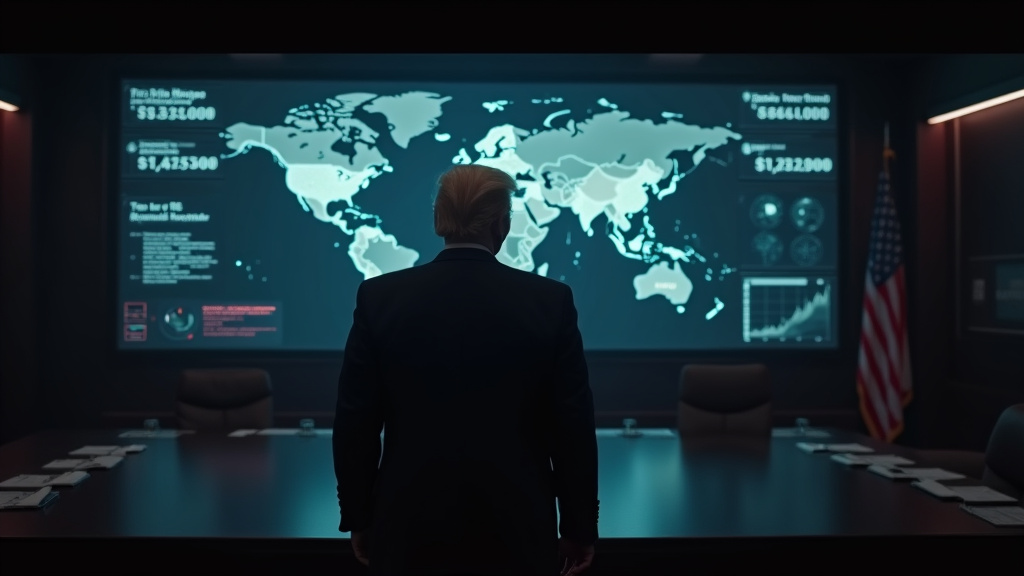


The agreement dictates that for the two-week duration, Iranian forces will ensure ‘safe passage’ for vessels. This is a critical concession. By decoupling the control of the Strait from the kinetic theater of war, the agreement isolates energy security from the primary ideological conflict. However, the temporary nature of this arrangement leaves a lingering question: what happens when the two weeks expire? The upcoming talks in Islamabad will likely focus on whether this maritime ‘safe zone’ can be extended or formalized into a lasting, permanent agreement that removes the threat of blockade from the region’s geopolitical toolkit.
Negotiating the 10-Point Peace Plan
Central to the success of the talks in Islamabad is the 10-point peace plan proposed by Tehran. While the details of this proposal are being tightly guarded, President Trump’s characterization of it as a ‘workable basis’ suggests a significant departure from the maximalist positions held by both sides earlier in the month. This plan is expected to address not only the immediate cessation of hostilities but also systemic issues, including the presence of proxy forces, the enforcement of previous nuclear-related sanctions, and the framework for future regional security architecture.
The inclusion of this proposal into the negotiation framework provides a structure that both sides can present to their respective domestic audiences as a path to victory or, at the very least, a dignified resolution. For Tehran, maintaining a level of regional leverage is paramount; for Washington, the priority remains the stability of the global energy supply and the containment of conflict escalation. The challenge for the negotiators will be bridging the gap between these two priorities without compromising on core national security interests.
The Role of Regional Proxies and Israel
While the US-Iran deal addresses the primary bilateral conflict, the broader regional security landscape remains complicated by the involvement of various proxies and regional allies. Israel, a key stakeholder in the Middle East, has expressed a guarded stance on the ceasefire. Reports indicate that while Israel acknowledges the benefits of a temporary lull, it maintains that the agreement does not affect its specific operations against groups like Hezbollah in Lebanon. This creates a dual-track security environment: a formal pause between the US and Iran, but an ongoing, active conflict in other theaters.
The ceasefire also prompted a response from groups like the Islamic Resistance in Iraq, which announced a parallel two-week suspension of its operations. This suggests that the influence of the primary ceasefire agreement extends, albeit informally, to the network of non-state actors operating in the region. Whether this synchronization holds throughout the negotiation period remains a critical variable for stability.
FAQ: People Also Ask
1. Does the two-week ceasefire mean the war is over?
No. Both the U.S. and Iranian officials have emphasized that the ceasefire is a temporary measure designed to allow for peace negotiations to begin in Islamabad. It does not signify a formal end to the war, but rather a pause in kinetic operations to facilitate diplomatic discussions.
2. Why is the Strait of Hormuz so critical to this deal?
the Strait of Hormuz is a vital chokepoint for the global energy market, carrying roughly 20% of the world’s total petroleum consumption. Ensuring safe passage through this strait is a primary global interest, and reopening it was a mandatory condition set by the U.S. for the ceasefire.
3. Who is mediating the peace talks?
Pakistan has emerged as the primary mediator in this conflict. Prime Minister Shehbaz Sharif and the Pakistani government have been instrumental in facilitating communication between Washington and Tehran, leading to the current agreement and the upcoming talks in Islamabad.
4. Will Israel stop its operations during this two-week period?
According to reports, the ceasefire primarily concerns the direct US-Iran conflict. Israel has indicated that it maintains the right to continue its own operations, particularly against Hezbollah in Lebanon, meaning the region remains complex and multi-layered despite the US-Iran pause.