Skip to content
The Chicago Today
Quantum Aerospace
  • Home
  • Current News
  • Explore & Enjoy
  • Sports
  • Sound & Screen
  • Sip & Savor
  • Style & Innovation
  • Editors Take
Trending
March 9, 2026BINI Electrifies ‘It’s Showtime’ Premiere with Chart-Topping ‘Unang Kilig’ Performance March 9, 2026Chicago Dance Studio Confrontation Goes VIRAL: Couple’s ‘ICE’ Threat Sparks Outrage March 9, 2026Oil Prices Smash $115 Barrel as Iran War Cripples Supply: Global Markets Reel March 9, 2026Illinois Eyes 2026 Big Ten Crown Amidst Tight Championship Race in Chicago March 9, 2026Chicago Blackhawks Fall in OT Thriller to Dallas Stars; Blashill Focuses on Development March 9, 2026Three Days Grace Brings ‘Alienation Tour’ to Chicago’s Allstate Arena March 9, 2026 March 9, 2026Iran Appoints Mojtaba Khamenei as Supreme Leader Amid War; Oil Prices Skyrocket Past $100 March 8, 2026Jesse Jackson Sr.’s Family Says Final Goodbye in Chicago After National Tributes March 8, 2026Cubs Rally Past A’s 4-3 in Spring Training Thriller March 8, 2026March 2026 Brings Blockbuster Streaming Releases: Harry Styles Concert Film and Steve Carell Comedy Lead the Charge
The Chicago Today
The Chicago Today
  • Home
  • Current News
  • Explore & Enjoy
  • Sports
  • Sound & Screen
  • Sip & Savor
  • Style & Innovation
  • Editors Take
  • Blog
  • Forums
  • Shop
  • Contact
The Chicago Today
  Current News  Senate Passes Landmark $150 Billion Climate Resilience Act (S. 105), Advances to House
Current News

Senate Passes Landmark $150 Billion Climate Resilience Act (S. 105), Advances to House

Tiana BlakeTiana Blake—April 17, 20250
FacebookX TwitterPinterestLinkedInTumblrRedditVKWhatsAppEmail

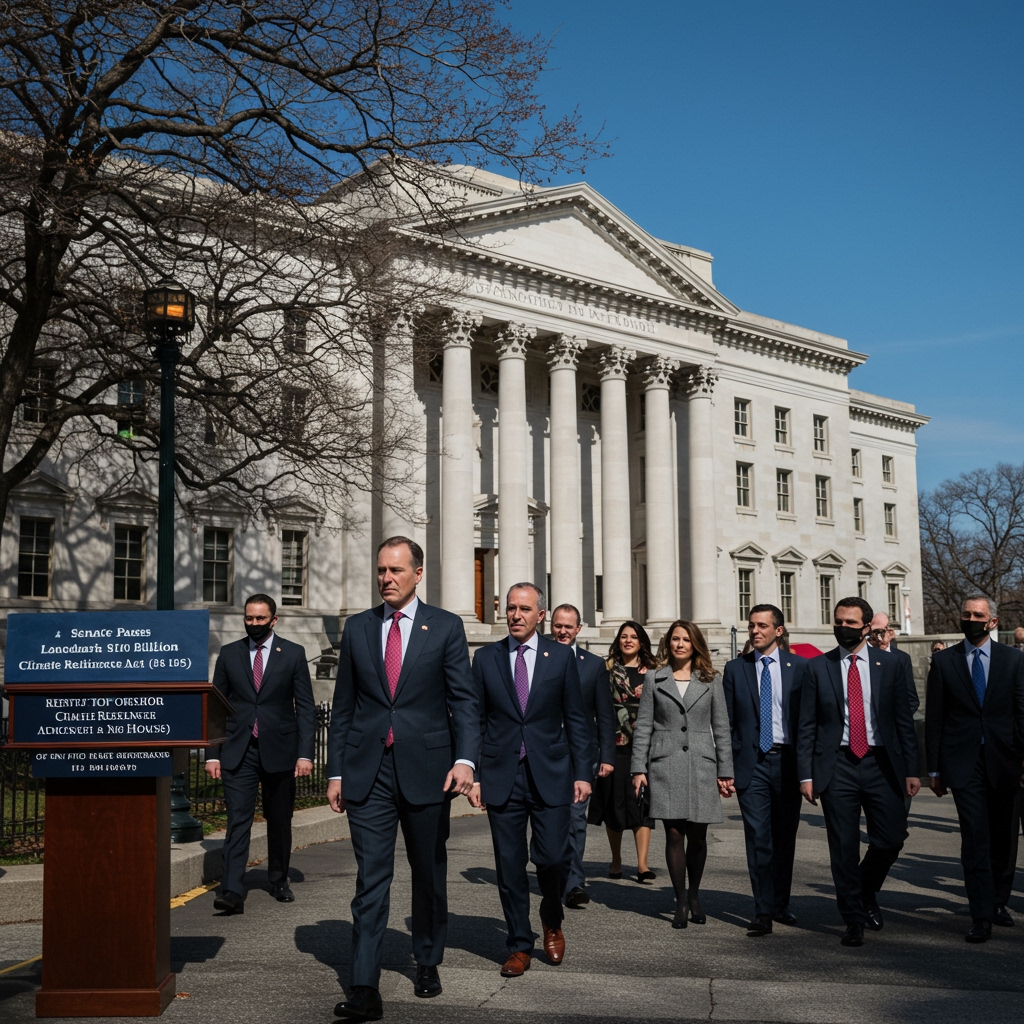
\”Washington, D.C.\” — In a pivotal legislative action today, the U.S. Senate passed the landmark Climate Resilience Act, designated as S. 105. The bill cleared the chamber with a significant vote of 58 in favor to 42 against, marking a crucial moment in the federal response to climate change impacts. Following its passage in the Senate, the legislation now moves to the House of Representatives for further consideration, where its future will be debated.

The passage of S. 105 culminates several weeks of intense debate and negotiation within the Senate. Lawmakers grappled with the scope, funding mechanisms, and strategic priorities of the proposed legislation, reflecting the complexities and differing perspectives on how best to address the escalating challenges posed by a changing climate. Proponents argued for the necessity of a comprehensive, federally coordinated effort, while opponents raised concerns about the bill’s cost, potential overreach of federal authority, and the effectiveness of its proposed measures. Despite these divisions, the bill garnered sufficient support to advance.
More stories
Senate Passes Landmark $150 Billion Climate Resilience Act (S. 105), Advances to House

Senate Passes Landmark $150 Billion Climate Resilience Act (S. 105), Advances to House

April 17, 2025
cop29baku

COP29: A Crucial Turning Point in Global Climate Action

November 10, 2024
Historic Climate Accord Signed in Paris: 195 Nations Target Net Zero by 2060

Historic Climate Accord Signed in Paris: 195 Nations Target Net-Zero by 2060

March 17, 2025
G20 Nations Launch Landmark $500 Billion Global Resilience and Sustainable Development Fund at Rome Summit

G20 Nations Launch Landmark $500 Billion Global Resilience and Sustainable Development Fund at Rome Summit

June 10, 2025

At the core of the Climate Resilience Act is a substantial financial commitment: an allocation of $150 billion over the next five fiscal years. This funding is specifically earmarked for critical initiatives aimed at bolstering the nation’s resilience to climate change. The bill targets two primary areas identified as central to both mitigating future impacts and adapting to current realities: the development of renewable energy infrastructure and the enhancement of coastal defense systems.

A significant portion of the allocated $150 billion is dedicated to accelerating the transition to clean energy sources and modernizing the nation’s energy infrastructure. This includes funding for research and development of advanced renewable technologies, incentives for the deployment of solar, wind, geothermal, and other non-fossil fuel energy systems, and investments in upgrading the electrical grid to handle variable renewable inputs more effectively. The funding also supports the expansion of transmission lines, the development of energy storage solutions, and projects aimed at increasing energy efficiency across various sectors. The objective is not only to reduce greenhouse gas emissions, a primary driver of climate change, but also to create a more resilient and decentralized energy network less vulnerable to disruptions. This investment is expected to spur innovation, create jobs in the green energy sector, and decrease reliance on energy sources contributing to climate instability.

Simultaneously, the act directs substantial funding towards strengthening coastal defense systems in regions particularly vulnerable to the effects of rising sea levels, increased storm intensity, and coastal erosion. These vulnerable regions include areas along the Atlantic and Gulf Coasts, low-lying Pacific islands, and communities around the Great Lakes. The funding will support a range of projects, from the construction and reinforcement of physical barriers such as seawalls and levees to the implementation of nature-based solutions like the restoration of wetlands, mangrove forests, and barrier islands, which provide natural buffers against storm surges. The legislation also includes provisions for updating building codes in coastal areas, improving early warning systems for extreme weather events, and potentially assisting with community relocation efforts in areas facing unavoidable long-term inundation risks. The focus is on protecting coastal populations, critical infrastructure, and valuable ecosystems from the direct physical impacts of a changing climate.

The passage of S. 105 represents a significant step forward in establishing a cohesive federal strategy for climate resilience. While states and municipalities have initiated various adaptation and mitigation projects, this bill marks the most comprehensive and substantial commitment at the federal level to date. It elevates climate resilience from a collection of disparate projects to a national priority with dedicated, large-scale funding and a clear mandate to invest in both energy transition and physical defense. Supporters hail it as a necessary and overdue response to an existential threat, recognizing that climate change impacts are already being felt across the country.

The 58-42 vote breakdown indicates a strong majority favoring the bill’s passage, though significant opposition remains. The debate highlighted fundamental disagreements over the role and scale of government intervention in climate issues, as well as fiscal concerns regarding the $150 billion expenditure. The vote reflects a political landscape grappling with the urgent scientific consensus on climate change and the economic and social challenges of implementing large-scale solutions.

With the Senate’s approval secured, the Climate Resilience Act (S. 105) now faces scrutiny in the House of Representatives. The legislative process in the House may involve review by multiple committees with relevant jurisdiction, including those overseeing energy, environment, transportation, and appropriations. The bill could undergo further amendments and face renewed debate before potentially being brought to a floor vote. If the House passes its own version, a conference committee would be necessary to reconcile differences between the two chambers’ bills before a final version could be sent to the President’s desk for signature into law. The path ahead in the House is uncertain, and the bill’s ultimate fate remains to be determined.

Nevertheless, the Senate’s passage of the Climate Resilience Act today underscores a growing recognition of the need for proactive federal investment in climate adaptation and mitigation infrastructure. It sets the stage for a critical legislative battle in the House and signals a potential shift towards a more robust national strategy for confronting the impacts of a warming planet. The $150 billion allocation over five years represents a substantial commitment aimed at building a more resilient future for the United States.


climateresilience
FacebookX TwitterPinterestLinkedInTumblrRedditVKWhatsAppEmail

Tiana Blake

Tiana Blake is a journalist with an ear for music and an eye for all the fun things unfolding around the world. Whether she’s spotlighting up-and-coming artists, chasing down the quirkiest festivals, or uncovering hidden gems in local street scenes, Tiana’s work turns distant places into vibrant, approachable experiences. She’s known for taking readers beyond the headline acts—think late-night jam sessions in tucked-away bars and art fairs in unexpected neighborhoods. When she’s not on the move, you’ll find her sifting through vinyl collections, chatting with fellow music lovers, or planning her next cultural deep dive. Ultimately, Tiana believes every corner of the globe has a good story waiting to be told—and she’s on a mission to share it.

Chicago Considers Late-Night Bar Pilot: City Council Committee Grills Proposed 4 AM Ordinance
Netflix Reshapes Pricing & Tiers: New Premium Ad Plan, Standard Price Hikes Ahead of Q3 2025
Related posts
  • Related posts
  • More from author
Current News

Iran Appoints Mojtaba Khamenei as Supreme Leader Amid War; Oil Prices Skyrocket Past $100

March 9, 20260
Current News

US Destroys Iranian Drone Carrier in Major Naval Strike

March 6, 20260
Current News

US Navy Strikes Iranian Drone Carrier Amid Intensified Offensive; Tehran’s Military Capacity Severely Degraded

March 6, 20260
Load more
Read also
Sound & Screen

BINI Electrifies ‘It’s Showtime’ Premiere with Chart-Topping ‘Unang Kilig’ Performance

March 9, 20260
Headlines

Chicago Dance Studio Confrontation Goes VIRAL: Couple’s ‘ICE’ Threat Sparks Outrage

March 9, 20260
Featured

Oil Prices Smash $115 Barrel as Iran War Cripples Supply: Global Markets Reel

March 9, 20260
Sports

Illinois Eyes 2026 Big Ten Crown Amidst Tight Championship Race in Chicago

March 9, 20260
Style & Innovation

Chicago Blackhawks Fall in OT Thriller to Dallas Stars; Blashill Focuses on Development

March 9, 20260
Explore & Enjoy

Three Days Grace Brings ‘Alienation Tour’ to Chicago’s Allstate Arena March 9, 2026

March 9, 20260
Load more
Recent Posts
  • BINI Electrifies ‘It’s Showtime’ Premiere with Chart-Topping ‘Unang Kilig’ Performance March 9, 2026
  • Chicago Dance Studio Confrontation Goes VIRAL: Couple’s ‘ICE’ Threat Sparks Outrage March 9, 2026
  • Oil Prices Smash $115 Barrel as Iran War Cripples Supply: Global Markets Reel March 9, 2026
  • Illinois Eyes 2026 Big Ten Crown Amidst Tight Championship Race in Chicago March 9, 2026
  • Chicago Blackhawks Fall in OT Thriller to Dallas Stars; Blashill Focuses on Development March 9, 2026

    # TRENDING

    chicago20252026aiFashionStreamingreviewaccountabilityinnovationfundingfestivalmusicnetflixalbumculinaryactionacquisitionnascarhululineup
    © 2024 All Rights Reserved by Chicago Today
    • Contact
    • Cookie Policy
    • Privacy Policy
    The Chicago Today
    Manage Consent
    To provide the best experiences, we use technologies like cookies to store and/or access device information. Consenting to these technologies will allow us to process data such as browsing behavior or unique IDs on this site. Not consenting or withdrawing consent, may adversely affect certain features and functions.
    Functional Always active
    The technical storage or access is strictly necessary for the legitimate purpose of enabling the use of a specific service explicitly requested by the subscriber or user, or for the sole purpose of carrying out the transmission of a communication over an electronic communications network.
    Preferences
    The technical storage or access is necessary for the legitimate purpose of storing preferences that are not requested by the subscriber or user.
    Statistics
    The technical storage or access that is used exclusively for statistical purposes. The technical storage or access that is used exclusively for anonymous statistical purposes. Without a subpoena, voluntary compliance on the part of your Internet Service Provider, or additional records from a third party, information stored or retrieved for this purpose alone cannot usually be used to identify you.
    Marketing
    The technical storage or access is required to create user profiles to send advertising, or to track the user on a website or across several websites for similar marketing purposes.
    Manage options Manage services Manage {vendor_count} vendors Read more about these purposes
    View preferences
    {title} {title} {title}