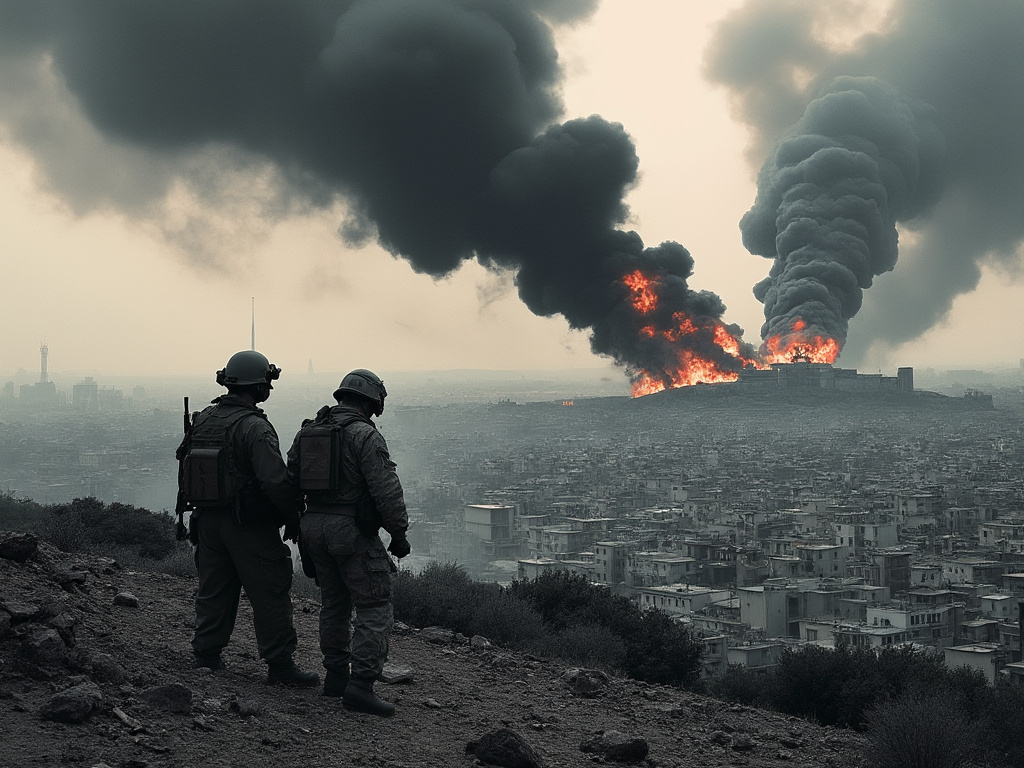
WASHINGTON — In a statement that has sent shockwaves through American households, White House Press Secretary Karoline Leavitt suggested that the return of military conscription remains a theoretical possibility. During a Sunday interview with Maria Bartiromo on Fox News, Leavitt was asked directly if the escalating war in Iran would necessitate ground troops or a reinstatement of the draft. Rather than dismissing the notion, Leavitt responded that while it is not the “current plan,” the President “wisely keeps his options on the table.” This refusal to take the draft off the board has ignited a fierce national debate over the future of American military service and the severity of the current Middle Eastern engagement.
The Deep Dive
The Bartiromo Exchange
The controversy began during a routine Sunday morning press circuit. Maria Bartiromo pressed Leavitt on the logistics of the current conflict, specifically how the administration plans to sustain a long-term ground presence in Iran if the situation continues to deteriorate. When the question of a military draft was raised, the expectation was a swift denial. Instead, the ambiguity of Leavitt’s response—framing the draft as a strategic “option”—has been interpreted by many as a signal that the administration’s recruitment efforts are failing to meet the demands of the current war footing.
Political Fallout and Public Anxiety


The backlash was instantaneous. Social media platforms were flooded with posts from concerned parents and young men between the ages of 18 and 25, who are currently required to register with the Selective Service System. Military analysts suggest that even mentioning the draft is a risky political move. The Trump administration has previously emphasized a “peace through strength” approach, yet the reality of a multi-front conflict is testing the limits of the all-volunteer military. Editorial boards across the country have labeled the rhetoric as “careless,” arguing that such talk only serves to deepen the domestic divide over foreign entanglements.
Historical Context of the Draft
The United States has not conscripted a soldier since June 30, 1973. The shift to an all-volunteer force following the Vietnam War was seen as a fundamental change in the relationship between the citizen and the state. Reinstating military conscription would require an Act of Congress, a hurdle that remains significant even in a polarized legislative environment. However, the mere suggestion that the executive branch views it as a viable tool has revived dormant fears of the “lottery drawings” and “induction notices” that defined the 1960s.
The Iran Conflict Escalation
At the heart of the conscription talk is the deteriorating situation in the Middle East. With the U.S. and Israel engaged in active operations against Iranian interests, the demand for personnel is at its highest in decades. Current reports indicate that roughly one-fifth of the world’s petroleum supply has been impacted by the conflict, and military leaders are reportedly concerned about the endurance of the current force. If the conflict transitions from surgical strikes to a prolonged ground occupation, the math of a volunteer-only military may no longer add up, according to some Pentagon insiders.
FAQ: People Also Ask
Is there an active military draft in the U.S. right now?
No. The United States military is currently an all-volunteer force. While almost all male U.S. citizens and male immigrants ages 18 through 25 are required to register with the Selective Service, this is a contingency plan and does not mean a draft is in effect.
What would it take to bring back the draft?
Reinstating the draft would require Congress to pass a law, which the President would then need to sign. It is not something the President can do unilaterally via executive order.
Who would be eligible if conscription were reinstated?
Under current law, men aged 18 to 25 who are registered with the Selective Service would be the first to be called. There has been ongoing legislative debate about whether women should also be required to register, but as of March 2026, it remains limited to men.