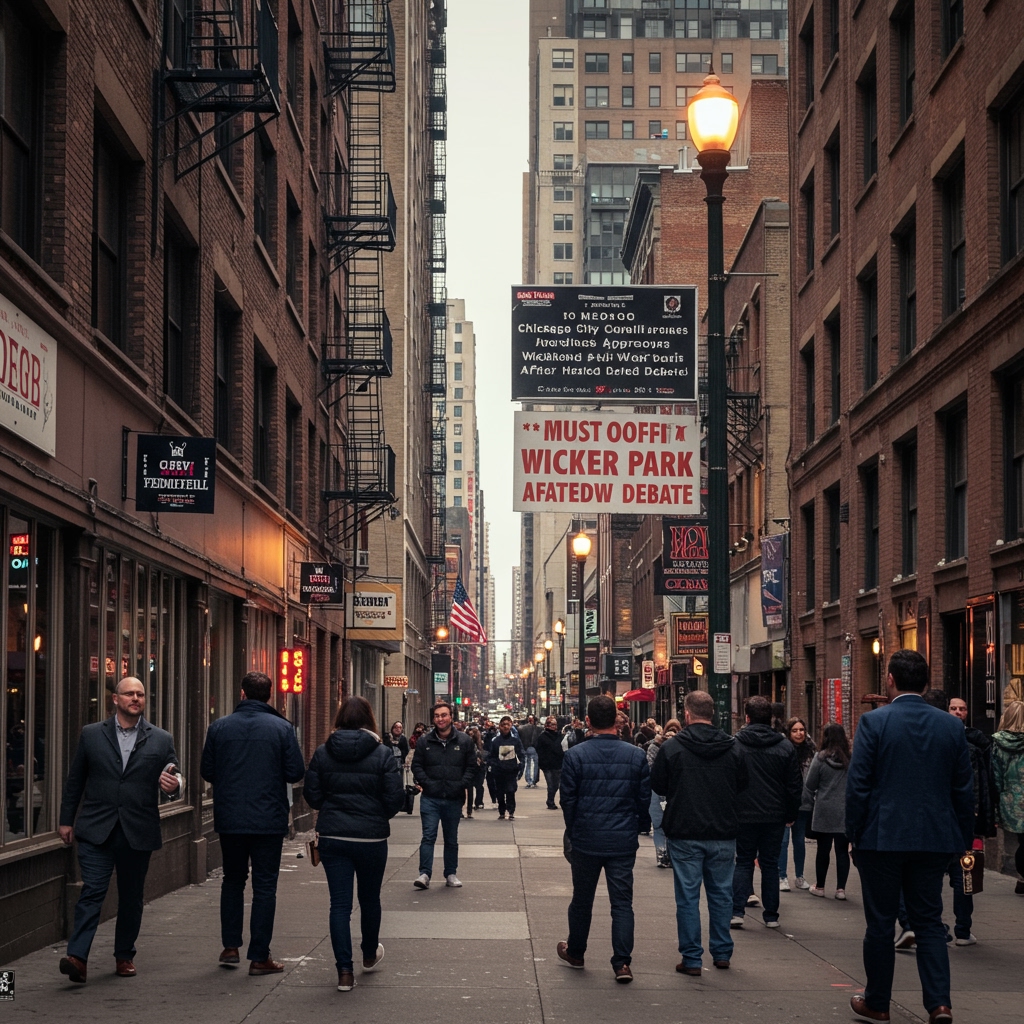
A pivotal decision was made yesterday by a key committee of the Chicago City Council, advancing a proposed ordinance that could significantly impact the operations of late-night establishments in the vibrant Wicker Park neighborhood. The measure, formally designated as ‘Ordinance 2025-NLZ-12’, is specifically designed to address long-standing noise complaints and enhance safety protocols in areas where the neighborhood’s bustling nightlife corridor abuts residential zones.
Proposed by Alderman Sarah Chen, the ordinance targets venues licensed to operate past 1 AM that are situated within a 500-foot radius of buildings primarily used for residential purposes. Should the ordinance be enacted, these establishments would face new, mandatory requirements: enhanced soundproofing measures to mitigate noise pollution affecting nearby residents, and the installation of external security camera systems to bolster safety and potentially deter unwelcome activity outside the premises during late hours.
The passage through the committee stage marks a significant step forward for the proposed regulations. Ordinance 2025-NLZ-12 is now officially scheduled for consideration by the full Chicago City Council, with a decisive vote anticipated on May 29, 2025. This upcoming vote is poised to be a focal point of discussion, highlighting the often-complex balance between supporting the economic engine of the city’s late-night sector and preserving the quality of life for its residents.
Details of the Proposed Regulations
The core of Ordinance 2025-NLZ-12 centers on two key mandated improvements for applicable venues. Firstly, it requires ‘enhanced soundproofing’. While the precise technical specifications may be subject to regulatory interpretation should the ordinance pass, this generally entails investments in sound-dampening materials for walls, ceilings, and doors, as well as potential upgrades to windows and HVAC systems to prevent noise from escaping buildings and disturbing neighbors. The goal is to significantly reduce the transmission of music, conversation, and other sounds originating from within late-night establishments into adjacent residential properties.
Secondly, the ordinance mandates the installation of ‘external security camera systems’. These systems would need to cover the exterior of the premises, including entrances, exits, and potentially nearby sidewalk areas. The intent is to provide surveillance capabilities that can aid in preventing disturbances, documenting incidents, and improving overall safety and security in the immediate vicinity of these late-night venues, particularly during peak operating hours when pedestrian traffic and activity are high.

These requirements are not universally applied but are specifically triggered by the proximity of the venue to residential housing – within 500 feet – and its operating license allowing business past 1 AM. This targeted approach reflects an effort to focus the regulations on the establishments most likely to contribute to late-night noise and safety issues impacting residential areas.
Context: Addressing Resident Concerns
The push for Ordinance 2025-NLZ-12 stems from persistent concerns raised by residents living near the dense concentration of bars, clubs, and restaurants that constitute Wicker Park’s vibrant nightlife scene. For years, the area has grappled with complaints related to excessive noise, particularly during weekend late nights and early mornings. Issues often cited include loud music emanating from venues, noise from patrons congregating outside, and general street noise associated with late-night activity.
Beyond noise, safety is another significant concern. Residents and local officials have voiced the need for improved security measures to address potential issues such as public intoxication, disturbances, and other safety-related incidents that can occur as patrons leave establishments in the early morning hours. Alderman Chen’s proposal is a direct legislative response aimed at mitigating these specific quality-of-life and safety challenges reported by her constituents.
Hospitality Industry’s Response and Concerns
Following the committee’s vote, the Chicago Hospitality Alliance, an organization representing many of the city’s bars, restaurants, and entertainment venues, issued a statement expressing significant reservations about the proposed ordinance. The Alliance characterized the mandated soundproofing and security camera requirements as “significant unfunded mandates.”
The core of the industry’s concern revolves around the potential financial burden these new regulations would place on businesses. Upgrading soundproofing in older buildings, common in Wicker Park, can be a complex and costly endeavor, potentially requiring extensive construction work. Similarly, installing and maintaining professional-grade external security systems represents an additional operational expense.
The Chicago Hospitality Alliance argues that these costs – encompassing both initial renovations and ongoing maintenance and monitoring – could be prohibitively expensive, especially for smaller, independently owned bars and venues that may not have substantial capital reserves. The Alliance’s statement warned that the proposed regulations could potentially lead to the closure of some of these smaller businesses, unable to absorb the required investments.
This perspective highlights the economic dimension of the debate. Late-night venues contribute significantly to Chicago’s economy through job creation, tax revenue, and attracting visitors. The hospitality industry argues that overly stringent or costly regulations, particularly those lacking financial assistance programs, could jeopardize the viability of these businesses, thereby impacting the city’s economic vitality and cultural landscape.
The Path Forward to the Full Council
The advancement of Ordinance 2025-NLZ-12 to the full City Council sets the stage for a potentially contentious debate. Alderman Chen and proponents of the measure will likely emphasize the necessity of protecting residential quality of life and enhancing public safety. They may point to similar regulations in other urban areas or specific incidents that underscore the need for action.
Conversely, the Chicago Hospitality Alliance and venue owners will likely lobby council members to consider the economic impacts, the potential for business closures, and perhaps propose alternative or less costly approaches to address noise and safety concerns. Discussions may include exploring phased implementation, potential city assistance programs, or alternative enforcement mechanisms.
Scheduled for May 29, 2025, the full City Council vote will require a majority to pass the ordinance into law. The outcome will have tangible consequences for both residents living near Wicker Park’s nightlife hub and the businesses that operate there, shaping the future dynamic of this popular Chicago neighborhood.