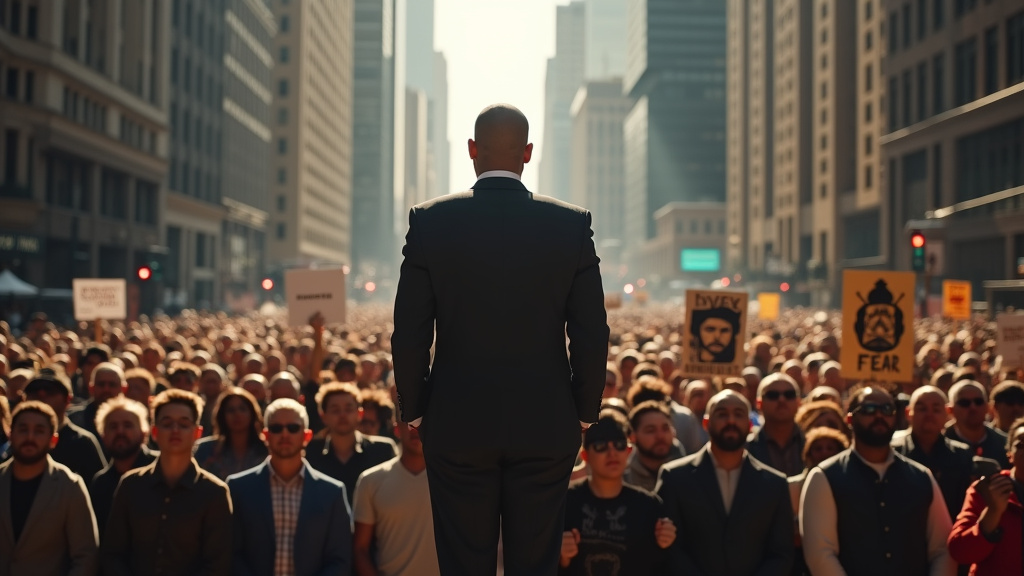
CHICAGO – A powerful call for a nationwide general strike, issued by Chicago Mayor Brandon Johnson during a prominent rally on October 18, 2025, has rapidly gained traction online, becoming a major NEWS HEADLINE and sparking intense discussion about its potential to materialize. Johnson, speaking at the “No Kings Day II” event, invoked the historical actions of enslaved ancestors as inspiration, stating, “If my ancestors, as slaves, can lead the greatest general strike in the history of this country, taking it to the ultra-rich and big corporations, we can do it too!”. This declaration, made to a crowd estimated in the hundreds of thousands in Chicago alone, quickly went VIRAL across social media platforms, amplifying the message and the underlying sentiment of protest against perceived tyranny and corporate exploitation. This bold mayoral strike call has ignited the general strike debate across the nation.
Historical Echoes and Contextualizing the General Strike Debate
Mayor Johnson’s reference to the “general strike” by enslaved people during the Civil War highlights a critical, though often overlooked, aspect of American labor history. Historian W.E.B. Du Bois documented how masses of enslaved individuals shifted their labor towards the Union forces, effectively acting as a massive, albeit unintentional, general strike that crippled the Confederacy and aided the abolitionist cause. This historical parallel provides a deep well of inspiration for contemporary movements seeking systemic change, fueling the ongoing general strike debate.
Historically, the United States has witnessed significant general strikes, primarily city-specific actions rather than nationwide endeavors. Notable examples include the Seattle General Strike of 1919, which saw over 60,000 workers shut down the city for five days, and the Oakland General Strike of 1946, a major challenge to corporate power involving over 100,000 participants. These historical strikes USA, while impactful, occurred in different socio-economic and legal landscapes, and their success informs the current general strike debate.
Johnson’s call emerged within the context of the “No Kings” movement, a coalition of left-leaning groups protesting the policies of the Trump administration. The protests themselves were framed as resistance to “fascist attacks” and “tyrannicity,” with specific grievances against federal actions targeting Chicago, including alleged “military occupation” and “ICE fascist attacks.”
The Legal and Practical Hurdles to a Nationwide General Strike
The feasibility of a nationwide general strike in the modern era faces significant legal and structural obstacles. The Taft-Hartley Act of 1947, a piece of federal legislation, outlawed many forms of union solidarity actions, including political strikes, thereby rendering a large-scale, union-orchestrated general strike illegal. This law fundamentally reshaped the landscape for organized labor, pushing such tactics to the fringes of legal possibility for unions, a key point in the general strike debate.
Despite these legal barriers, some proponents, particularly within grassroots activist circles, suggest that a general strike could still be organized outside of traditional union structures. The “No Kings” movement is actively working to establish a nationwide rapid response network, indicating a commitment to sustaining organized action. However, the involvement and endorsement of established labor unions, with their significant organizational capacity and resources, are often considered crucial for a strike of national magnitude. While Johnson’s background as a former Chicago Teachers Union organizer suggests strong ties to organized labor, there are indications of reluctance among some union leadership to fully commit to such a radical undertaking, potentially due to fear of retaliation or internal divisions, further complicating the general strike debate.
Potential Economic and Social Ramifications of a General Strike
A true general strike would represent an unprecedented economic power move. Historically, strikes, even smaller ones, can lead to substantial economic disruption. Data from recent large-scale work stoppages show significant impacts, including millions in lost economic output, job losses, and severe strains on supply chains. A nationwide cessation of work would magnify these effects exponentially, potentially halting commerce, disrupting essential services, and causing widespread economic strain, a core element of the general strike debate.
For workers, the immediate consequence of a strike is reduced income and potential curtailment of benefits. However, the ultimate goal of a general strike, as articulated by Johnson, is to “take it to the ultra-rich and big corporations” and compel them to “pay their fair share” for essential services like education, jobs, and healthcare. The broad appeal of this message suggests a potential for widespread participation, encompassing not just unionized workers but also a diverse array of individuals and communities suffering under current economic and political conditions, a vital consideration in the general strike debate.
The Evolving Landscape of Labor Action and the General Strike Debate
Mayor Johnson’s call to action has undeniably brought the concept of a general strike back into mainstream discourse. While the legal framework and the current posture of organized labor present formidable challenges, the resonance of his message and the momentum of grassroots movements suggest that the idea of collective economic power remains a potent force. Whether this call evolves from a viral moment into a tangible movement hinges on overcoming legal hurdles, fostering broad-based labor solidarity, and navigating the complex economic and political terrain of the United States. The conversation initiated by the CHICAGO mayor signifies a growing readiness among some segments of the population to explore extreme measures to address systemic inequalities and political grievances, ensuring the general strike debate continues.