Chicago Traffic Congestion Rises, Overtaking NYC as America’s Most Congested City
Chicago now faces the unenviable distinction of the most severe Chicago Traffic Congestion in the U.S. Drivers in Chicago lost an average of 112 hours to traffic in 2025, a significant increase that highlights growing urban traffic problems. This news comes directly from the INRIX 2025 Global Traffic Scorecard.
The report analyzed nearly 1,000 cities across 36 countries, revealing that congestion worsened in 88% of U.S. cities studied. Nationwide, drivers lost an average of 49 hours to traffic in 2025, a substantial six-hour increase from the prior year, indicating a widespread commute time increase.
Understanding Chicago Traffic Congestion
Chicago’s surge to the top of congestion rankings is a stark indicator of worsening Chicago Traffic Congestion. Drivers there lost 112 hours to peak congestion, costing each Chicago driver approximately $2,063. The total economic toll for the region, exacerbated by Chicago Traffic Congestion, was an estimated $7.5 billion.
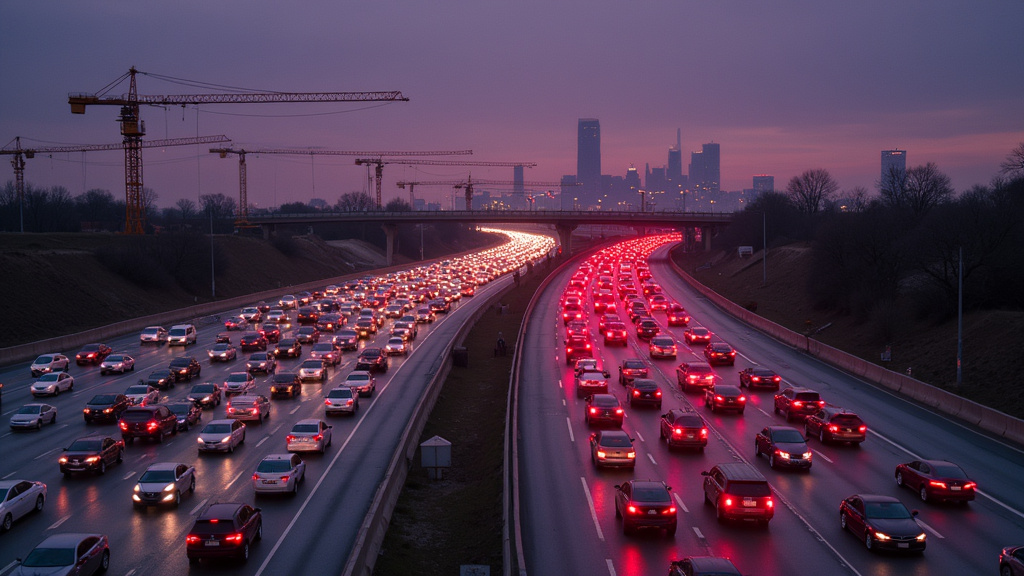
Several factors contribute to Chicago’s severe traffic woes. Ongoing construction projects on major roadways like the Kennedy and Stevenson Expressways are a primary cause of Chicago Traffic Congestion. These projects were expected to continue through 2025. Additionally, increased population density strains the city’s infrastructure, a common challenge leading to traffic congestion causes.
The return to pre-pandemic commuting patterns plays a significant role in the rise of Chicago Traffic Congestion. Many workers have returned to offices, with car commuting now nearly back to 2019 levels. Public transit, however, lags behind with transit use down 22% from 2019. This imbalance pushes more people into cars, intensifying Chicago Traffic Congestion.
NYC Traffic Pricing and Congestion Management
New York City, once the most congested, saw its traffic levels remain relatively stable. Drivers in NYC lost 102 hours to congestion in 2025. A key factor contributing to this stability, and potentially helping to mitigate further Chicago Traffic Congestion by comparison, is NYC’s new congestion pricing policy. This policy charges drivers entering Manhattan and went into effect in January 2025. The policy has reduced vehicle entries into the congestion zone, likely contributing to NYC not seeing increased delays and offering insights into potential gridlock solutions.
Global Perspective on Traffic Congestion
Globally, Istanbul remains the most congested city, with drivers losing 118 hours to traffic, a 12% surge from the previous year. Travel delays are mounting worldwide, with economic growth and population increases straining road networks and contributing to urban traffic problems.
Other U.S. cities also face significant traffic delays. Philadelphia (101 hours), Los Angeles (87 hours), and Boston (83 hours) round out the top U.S. cities for delays. However, congestion worsened in 254 of the 290 U.S. cities studied, underscoring the pervasive nature of traffic congestion causes.
Implications and Future Trends for Chicago Traffic Congestion
The increase in Chicago Traffic Congestion has broad implications, impacting businesses, food deliveries, and overall productivity. Rising housing costs also play a role, with many workers facing longer commutes or higher rents, adding strain to regional road networks and contributing to the commute time increase.
Infrastructure spending has not kept pace with demand, and aging bridges alongside delayed upgrades amplify delays. Experts suggest that cities need comprehensive traffic management strategies. Some cities are exploring AI-based traffic signals, while others are considering congestion pricing, such as the NYC traffic pricing model. These efforts aim to improve urban mobility and combat worsening Chicago traffic delays.
The return to office mandates is a significant driver behind the current traffic congestion. This shift stabilizes commuting patterns but also intensifies congestion pressures, a key factor in the ongoing Chicago Traffic Congestion. The headline news is clear: traffic jams are a growing challenge, a trend likely to continue without significant intervention. The top priority for many cities must be finding gridlock solutions. The INRIX traffic scorecard offers critical data for understanding and addressing Chicago Traffic Congestion.
The INRIX 2025 Global Traffic Scorecard provides a crucial benchmark for cities, aiding planners in making informed decisions. Addressing Chicago Traffic Congestion requires sustained effort. The fight against gridlock is ongoing.