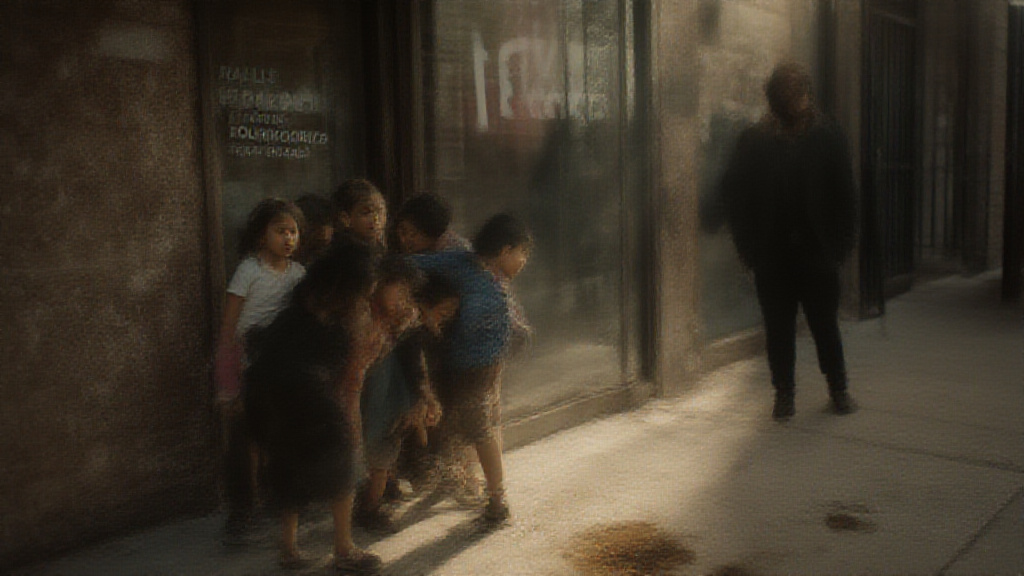
CHICAGO – A palpable sense of fear has gripped Chicago’s school communities as Immigration and Customs Enforcement (ICE) activity intensifies across the city, prompting urgent discussions about implementing remote learning options. Reports of federal enforcement actions near school routes and educational facilities have escalated anxiety among students, families, and educators, leading to calls for emergency measures to ensure safety and educational continuity.
Heightened Anxiety on the School Route




The escalating presence and tactics of federal immigration agents have created an atmosphere of dread for many Chicago families. Incidents, including detentions and the deployment of tear gas in proximity to schools, have been cited as major concerns. The Chicago Board of Education has acknowledged these fears, with some members calling for immediate action to protect students. Reports indicate that students have been detained en route to school, and some schools have implemented soft lockdowns as a precautionary measure, even when no immediate emergency was present within the building.
Official Responses and Calls for Virtual Learning
In response to the growing unease, the Chicago Board of Education is actively considering emergency measures, including the possibility of virtual learning. This move comes as the Chicago Teachers Union (CTU) has strongly advocated for remote learning options to alleviate the anxiety that is reportedly emptying classrooms. CTU president Stacy Davis Gates has emphasized that when children are too scared to attend school, it signifies a failure of protection. Mayor Brandon Johnson has been a vocal critic of the federal enforcement actions, denouncing them as tactics that exacerbate fear and disrupt learning. He has strongly condemned the federal government’s approach, stating that it undermines the safety and well-being of young people in the city. While Chicago Public Schools (CPS) has established a command center to provide round-the-clock support to schools experiencing heightened stress due to external enforcement activities, officials note that a broader shift to remote learning would likely require a state of emergency declaration from Illinois Governor J.B. Pritzker.
Federal Authorities’ Stance vs. Community Reports
Federal authorities, including the Department of Homeland Security (DHS) and ICE, have maintained that their operations do not target schools or children. In statements, officials have asserted that ICE is not conducting enforcement operations at schools and is not arresting children. They claim that the agency is focused on apprehending individuals without legal immigration status, particularly those with criminal records, as part of initiatives like “Operation Midway Blitz.” However, these assurances are frequently met with skepticism by local officials and community advocates who point to documented incidents of enforcement activity occurring in close proximity to schools, sometimes involving aggressive tactics and the use of tear gas near educational institutions and residential areas.
Wider Implications and Community Solidarity
The intensifying federal immigration enforcement has placed Chicago at the center of a significant debate regarding sanctuary city policies and federal authority. Beyond the immediate concern for students, the actions have sparked protests and calls for greater protections. Elected officials, including U.S. Senators, have urged the Department of Education to intervene and have demanded that federal agents be prohibited from conducting enforcement operations within a certain distance of schools. Community organizations and educators have also stepped up to support families, organizing school patrols, “walking school buses,” and providing “Know Your Rights” materials to inform residents of their legal protections. The situation highlights the deep divisions and the significant human impact of federal immigration policies on urban communities and their educational systems, making this a top NEWS HEADLINE.
Conclusion: Navigating Fear and Education
As federal immigration enforcement continues to be a source of distress for many in Chicago, the school district and city leaders face the complex challenge of balancing educational mandates with the urgent need to ensure student safety. While CPS is implementing protocols and providing support, the consideration of remote learning underscores the profound impact that external events can have on the fundamental right to education. The ongoing tension between federal enforcement efforts and the community’s demand for safe learning environments remains a critical issue, with families and educators hoping for a resolution that prioritizes the well-being and academic future of Chicago’s students. This developing story, often going VIRAL on social media for its raw impact, continues to unfold.