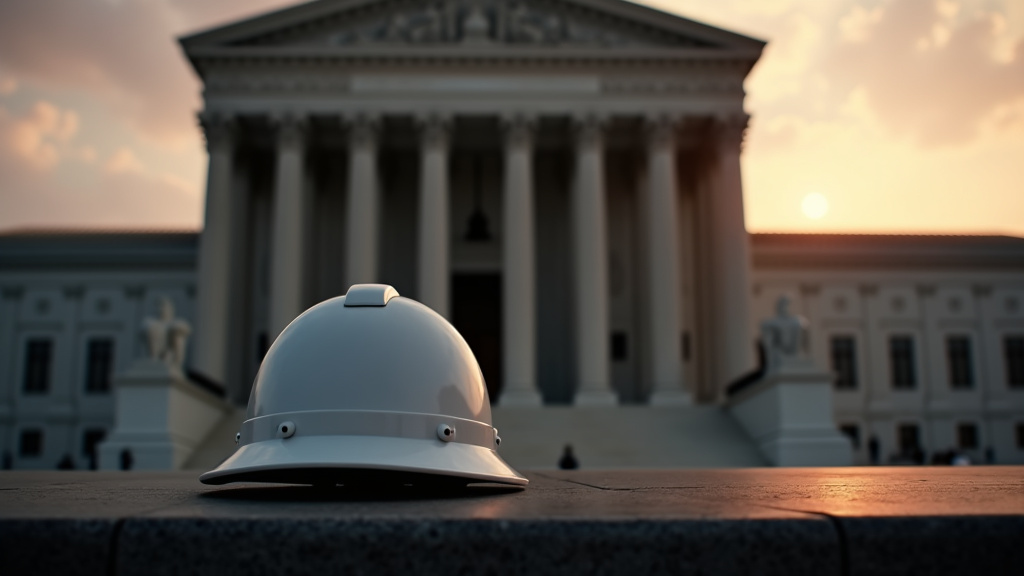
The U.S. Supreme Court blocked President Trump’s plan for a Trump troop deployment to Chicago, a decision that came on December 23, 2025, and represented a significant defeat for the Trump administration, highlighting the limits of federal authority. The court denied an emergency request, effectively upholding a lower court’s block on the proposed Trump troop deployment.
The Legal Battle Over Trump Troop Deployment and Federal Authority
The Trump administration had sought to invoke federal law, specifically Title 10, to authorize a Trump troop deployment, allowing presidents to federalize National Guard members. The administration’s justification for the Trump troop deployment was the purported need to protect federal personnel and property, especially in light of protests related to immigration enforcement. The administration alleged threats against federal agents, with White House spokeswoman Abigail Jackson stating the troops would protect officers as part of this Trump troop deployment initiative.

Officials in Illinois and Chicago vehemently opposed the plan, filing lawsuits arguing that the Trump troop deployment was unlawful and infringed upon state sovereignty, presenting clear state sovereignty challenges. Governor JB Pritzker famously called the move “un-American,” while Mayor Brandon Johnson vowed that Chicago would resist such federal action.
U.S. District Judge April Perry initially blocked the Trump troop deployment on October 9, 2025, finding no evidence of rebellion or a failure of civil authority. The Seventh Circuit Court of Appeals largely upheld Perry’s order, disagreeing with the Trump administration’s claims supporting the Trump troop deployment.
Supreme Court’s Reasoning on Trump Troop Deployment and Title 10 Federalization
In an unsigned order, the Supreme Court stated the government lacked clear authority for the Trump troop deployment, effectively delivering a Trump administration defeat. The majority interpreted the term “regular forces” to mean the U.S. military, suggesting that presidents could only federalize the Guard in rare circumstances where the military itself is unable to act. This interpretation significantly limited the scope of federal authority in such matters, impacting future Trump troop deployment considerations and underscoring federal authority limits.
Dissenting Voices and Legal Implications of the Trump Troop Deployment Decision
Three conservative justices—Samuel Alito, Clarence Thomas, and Neil Gorsuch—dissented, believing the court should have trusted the president’s judgment and prioritized the protection of federal officers. Justice Brett Kavanaugh agreed with blocking the Trump troop deployment but preferred narrower legal grounds, although his stance was still a win for the Illinois lawsuit.
The ACLU and other groups supported Illinois and Chicago, arguing that military policing of protests chills free speech and calling the administration’s rationale for the Trump troop deployment a “manufactured performance.”
The Supreme Court ruling on the Trump troop deployment is significant news, marking a rare setback for the Trump administration. This ruling could affect other deployment challenges and clarifies presidential limits on domestic military action. Governor Pritzker hailed it as a win for democracy, and Mayor Johnson praised the court’s pushback against militarization. The White House, however, stated the ruling did not change the president’s agenda. This trending news highlights national debates on federal power and civil liberties, particularly in the context of a potential Trump troop deployment.