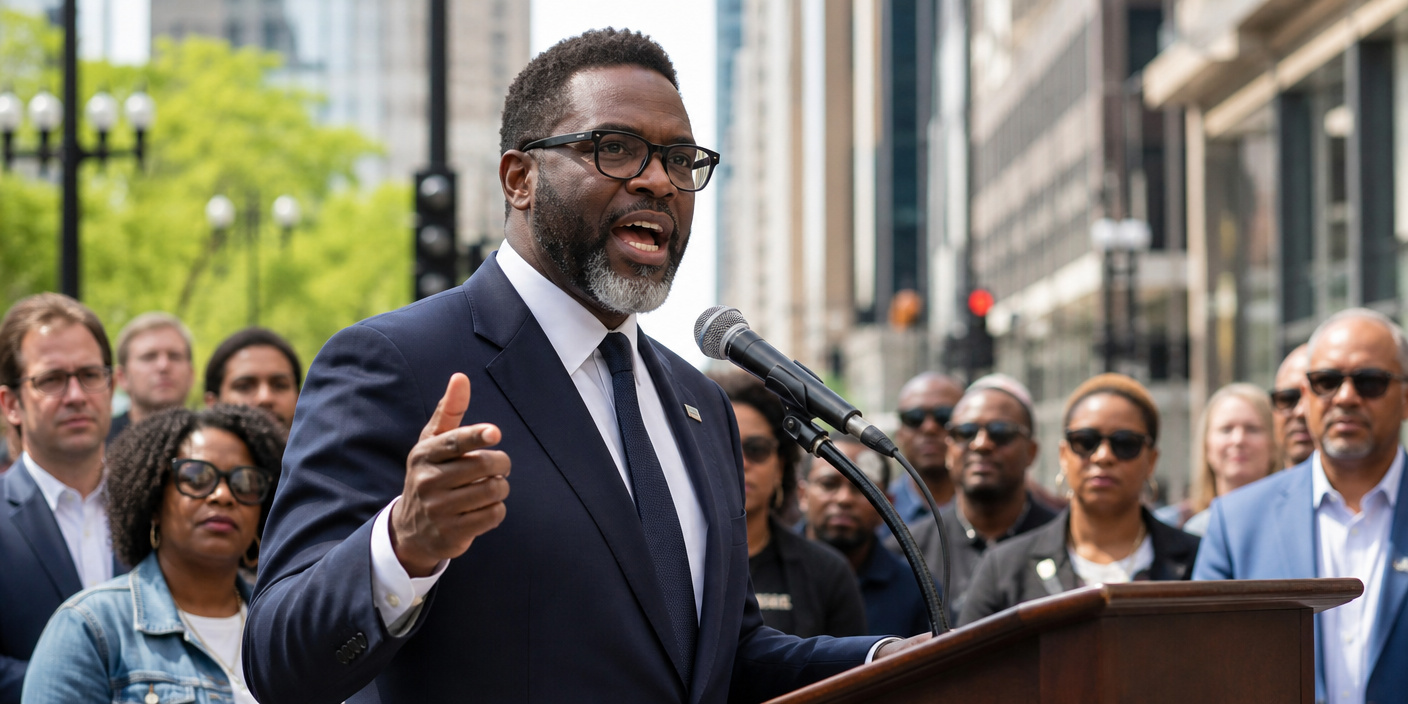
The Chicago Financial Future Task Force has recommended that the Chicago City Council implement automatic annual property tax increases tied to inflation. This proposal, detailed in an interim report released on Tuesday, September 16, 2025, aims to address the city’s projected $1.15 billion budget gap for the upcoming year and ensure Chicago’s long-term financial solvency.
The task force, composed of 24 members from Chicago’s business, labor, nonprofit, and academic sectors, was assembled by Mayor Brandon Johnson to devise strategies for closing the city’s significant deficit. The report presents a wide array of 89 preliminary options, encompassing cost-cutting measures and revenue-generating strategies that could collectively add between $1 billion and $2.1 billion to the city’s finances.
The Task Force’s Core Recommendation
The central tenet of the task force’s interim report is the necessity of the city’s largest revenue source, property taxes, keeping pace with inflation. The recommendation suggests an automatic annual adjustment to property taxes to reflect the national consumer price index. According to the report, such an increase would generate an estimated $56 million in 2026. The task force’s co-chairs, Loop Capital CEO Jim Reynolds and Chicago Urban League President Karen Freeman-Wilson, stated that automatically adjusting fines and fees annually alongside property taxes would help city officials “avoid hard decisions”.



This particular recommendation was not unanimous among the task force members. A dissent included in the report argues that any additional property tax increase would “decimate the city’s real estate sector”.
Background: A Persistent Budget Gap and Political Hurdles
Chicago has been grappling with substantial budget deficits for several years, exacerbated by rising pension costs, increasing personnel expenses, and significant debt. Mayor Brandon Johnson has faced considerable challenges in addressing these fiscal issues, particularly concerning property taxes.
For the 2025 budget, Johnson’s initial proposal included a $300 million property tax increase, which was unanimously rejected by the City Council in November 2024. This rejection underscored the City Council’s strong opposition to property tax hikes, with aldermen emphasizing that balancing the budget should not fall on the shoulders of working families. Despite campaigning on a promise not to raise property taxes, Johnson was forced to find alternative revenue sources, ultimately relying on other tax and fee increases totaling $165.5 million for the 2025 budget. This move ultimately closed the 2025 budget gap without increasing property taxes.
However, the city’s financial challenges are far from over, with projections indicating a $1.15 billion deficit for the following year. The current task force report seeks to provide a roadmap for tackling this ongoing crisis.
Implications and Reactions
The proposal for automatic, inflation-indexed property tax increases has drawn mixed reactions. While proponents argue it is a necessary mechanism to ensure fiscal stability and prevent drastic cuts to city services or other regressive tax hikes, opponents voice concerns about the impact on homeowners and the real estate market.
Historically, Chicago property taxes have seen significant increases. Between 2019 and 2025, Chicago property owners would have paid substantially more had their bills kept pace with inflation, a period marked by high inflation. In 2021, property taxes were automatically hiked to keep pace with inflation, a measure that was later opposed by Mayor Johnson. Recent data also shows significant spikes in property tax bills for many Cook County homeowners, impacting affordability and raising concerns about displacement.
Mayor Johnson himself has expressed reservations about the property tax recommendation, having stated in July 2025 that he would not propose a property tax hike for the 2026 budget. He has consistently advocated for progressive revenue streams, aiming to avoid balancing the budget “off the backs of working people” and emphasizing the need for the “ultra-rich” to “pay their fair share”. This news report provides critical context for ongoing editorial discussions regarding Chicago’s financial future.
Looking Ahead
The Chicago Financial Future Task Force’s report offers a menu of options, but the ultimate decisions rest with Mayor Johnson and the City Council. The task force will release a final report in May. The city faces the challenge of balancing its budget while navigating political opposition, the needs of its residents, and the complex demands of public finance. The effectiveness and acceptance of these recommendations will likely depend on ongoing negotiations and the city’s capacity to find consensus on revenue generation and expenditure management. This ongoing news will continue to shape Chicago’s fiscal landscape.