Skip to content
The Chicago Today
Quantum Aerospace
  • Home
  • Current News
  • Explore & Enjoy
  • Sports
  • Sound & Screen
  • Sip & Savor
  • Style & Innovation
  • Editors Take
Trending
December 7, 2025Viral Incidents Expose Deadly Black Maternal Health Crisis: Delayed Care Highlights Systemic Racism December 7, 2025Chicago Bears Defensive Strength Returns: Edwards, Sewell Back for Pivotal Packers Clash December 7, 2025December 2025 Streaming Blitz: Blockbusters, Dramas, and Holiday Cheer Arrive December 7, 2025Chicago Budget Battle: Mayor Johnson’s Head Tax Stance Creates Crisis December 6, 2025Chicago Bears Reinforce Defense for Critical Packers Showdown; Key Linebackers Return December 6, 2025Gen Z’s Quarter-Zip Takeover: TikTok Fuels New Menswear Staple, Driving Fashion News December 5, 2025Cup of Joe Dominates 2025 Music Scene: Billboard Philippines Names Them Top Artist December 5, 2025Chicago Grinds to a Halt, Overtaking NYC as America’s Most Congested City December 5, 2025Spencer Knight’s Heroics Lead Blackhawks to Tight 2-1 Victory Over Kings December 5, 2025Chicago Bulls Shun Giannis Trade Talk; Josh Giddey’s Rise Fuels Team’s Young Core Strategy
The Chicago Today
The Chicago Today
  • Home
  • Current News
  • Explore & Enjoy
  • Sports
  • Sound & Screen
  • Sip & Savor
  • Style & Innovation
  • Editors Take
  • Blog
  • Forums
  • Shop
  • Contact
The Chicago Today
  Sip & Savor  Chicago Tipped Wage Phase-Out Approved: Restaurant Industry and Worker Advocates Respond
Sip & Savor

Chicago Tipped Wage Phase-Out Approved: Restaurant Industry and Worker Advocates Respond

Sierra EllisSierra Ellis—May 24, 20250
FacebookX TwitterPinterestLinkedInTumblrRedditVKWhatsAppEmail

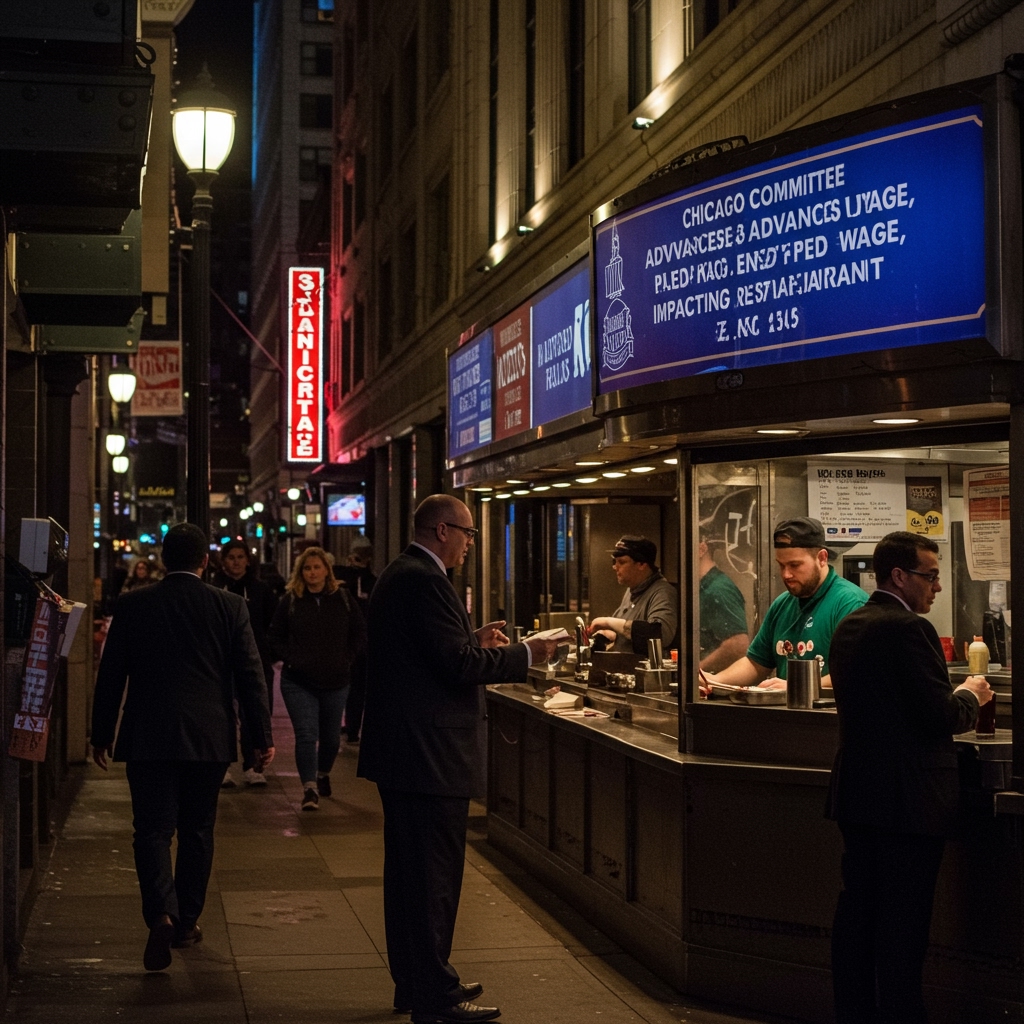
Chicago, IL – In a significant decision reshaping the city’s restaurant landscape, the Chicago City Council voted 36-10 on May 22, 2025, to approve an ordinance that will phase out the subminimum wage for tipped workers. This landmark legislation aims to transition tipped employees to the full standard minimum wage over a five-year period, with complete implementation expected by 2030.

The ordinance marks a pivotal moment in the ongoing debate over wage equity, particularly impacting the estimated 40,000 tipped workers across Chicago’s diverse culinary scene. The phased approach is designed to provide businesses and employees with a structured transition, beginning July 1, 2025.

Understanding the Ordinance’s Impact

Currently, tipped workers in Illinois can be paid a lower hourly wage than the standard minimum wage, with the expectation that tips will make up the difference. The newly approved ordinance eliminates this two-tiered wage system within the city of Chicago. Starting in the summer of 2025, employers will be required to gradually increase the base wage paid to tipped employees annually, ensuring they reach the full city minimum wage by the year 2030.

Supporters argue this change will provide income stability for workers, making their earnings more predictable and less reliant solely on customer tips. Critics, however, contend it will place an undue financial burden on restaurants, potentially leading to price increases, reduced staffing, or even business closures.

Restaurant Industry Voicing Concerns

The passage of the ordinance was met with sharp disappointment from the Illinois Restaurant Association (IRA). The organization has been a vocal opponent of the measure, citing serious concerns about its potential economic consequences for the industry.
More stories
Chicago's Lemon Bar Shines Bright: West Town Spot Earns 'One To Watch' and North America's 50 Best Recognition

Chicago’s Lemon Bar Shines Bright: West Town Spot Earns ‘One To Watch’ and North America’s 50 Best Recognition

June 24, 2025
Chicago Bars Face Stricter Late Night Rules: River North, West Loop Targeted

Chicago Bars Face Stricter Late-Night Rules: River North, West Loop Targeted

June 7, 2025
chf

Chicago’s Culinary Evolution: A 2024 Retrospective

November 24, 2024
Chicago Landmark Gale Street Inn Closes After 64 Years, Citing Staffing Challenges

Chicago Landmark Gale Street Inn Closes After 64 Years, Citing Staffing Challenges

June 19, 2025

Sam Toia, President and CEO of the IRA, previously stated that the move would significantly increase labor costs for restaurants, which already operate on thin margins. The IRA’s primary worry is the potential for increased operational expenses to force difficult decisions, including scaling back staff, raising menu prices substantially, or, in the worst-case scenario, leading to the closure of vulnerable businesses, particularly independent and small establishments.

The association argues that the current tipping system, when combined with a base wage, allows for competitive earnings for skilled service staff and provides flexibility for businesses. They fear that eliminating the tip credit will disrupt this model and could negatively impact both employers and employees through unintended consequences.

Worker Advocates Celebrate Wage Equity

Conversely, the ordinance’s approval was celebrated as a major victory by the One Fair Wage coalition and various worker advocacy groups who have championed the cause for years. These organizations view the elimination of the subminimum wage as a crucial step towards achieving true wage equity and dignity for tipped workers.

Advocates argue that the subminimum wage system is rooted in historical inequities and perpetuates wage instability, making it difficult for workers to earn a reliable living wage. They highlight that relying on tips for the majority of income can lead to significant fluctuations in pay, making financial planning challenging.

The One Fair Wage coalition emphasized that the ordinance will directly benefit approximately 40,000 tipped workers in Chicago, providing them with greater financial security and a more stable income stream. They contend that a higher, guaranteed base wage reduces dependency on tips, which can be influenced by factors outside a worker’s control, such as the economy or customer biases.

Economic Outlook: Conflicting Forecasts

The debate leading up to the vote featured conflicting economic forecasts. Opponents warned of significant job losses and a detrimental impact on Chicago’s reputation as a dining destination due to rising costs.

Proponents, drawing on studies from other cities that have adopted similar policies, argued that eliminating the subminimum wage leads to increased worker income, which in turn stimulates the local economy through greater consumer spending. They also suggest that stable wages can lead to lower staff turnover, improving service quality.

Looking Ahead: Implementation and Adaptation

The focus now shifts to the implementation of the ordinance, beginning July 1, 2025. The gradual five-year increase schedule is intended to give businesses time to adjust their financial models and operational strategies. Restaurants will need to decide how to manage the increased labor costs, whether through menu price adjustments, changes in service models, or other means.

Workers will see their base wages increase incrementally each year, moving closer to the full standard minimum wage. The transition period provides an opportunity for dialogue and adaptation within the industry as Chicago moves towards a single minimum wage standard for all workers by 2030. The city’s journey reflects a broader national conversation about the future of tipped wages and the pursuit of wage equity.


chicagotipped
FacebookX TwitterPinterestLinkedInTumblrRedditVKWhatsAppEmail

Sierra Ellis

Future Threads: Chicago Fashion Incubator Launches Landmark Sustainable Design Program at Block 37
Bipartisan AI Safety Bill Clears Senate Commerce Committee, Mandating Risk Assessments
Related posts
  • Related posts
  • More from author
Sip & Savor

Tara Reid Claims Drugging at Chicago Hotel Bar; Police Investigation Finds No Evidence

December 4, 20250
Sip & Savor

Chicago’s Gale Street Inn Rises Again: Jefferson Park Favorite Reopens Under New Ownership

December 4, 20250
Sip & Savor

Chicago’s Nightlife Ignites: November 2025 Delivers Trending Holiday Pop-Ups and New Bar Scenes

December 2, 20250
Load more
Read also
Headlines

Viral Incidents Expose Deadly Black Maternal Health Crisis: Delayed Care Highlights Systemic Racism

December 7, 20250
Sports

Chicago Bears Defensive Strength Returns: Edwards, Sewell Back for Pivotal Packers Clash

December 7, 20250
Sound & Screen

December 2025 Streaming Blitz: Blockbusters, Dramas, and Holiday Cheer Arrive

December 7, 20250
Editors Take

Chicago Budget Battle: Mayor Johnson’s Head Tax Stance Creates Crisis

December 7, 20250
Sports

Chicago Bears Reinforce Defense for Critical Packers Showdown; Key Linebackers Return

December 6, 20250
Style & Innovation

Gen Z’s Quarter-Zip Takeover: TikTok Fuels New Menswear Staple, Driving Fashion News

December 6, 20250
Load more
Moseley koch 1x1 square wordpress copy 50 opacity gen fill willamette weekly copy
Recent Posts
  • Viral Incidents Expose Deadly Black Maternal Health Crisis: Delayed Care Highlights Systemic Racism December 7, 2025
  • Chicago Bears Defensive Strength Returns: Edwards, Sewell Back for Pivotal Packers Clash December 7, 2025
  • December 2025 Streaming Blitz: Blockbusters, Dramas, and Holiday Cheer Arrive December 7, 2025
  • Chicago Budget Battle: Mayor Johnson’s Head Tax Stance Creates Crisis December 7, 2025
  • Chicago Bears Reinforce Defense for Critical Packers Showdown; Key Linebackers Return December 6, 2025

    # TRENDING

    chicago2025aiFashionStreamingreviewinnovationfundingfestivalmusicnetflixalbumculinarynascarhululineupshootingdiningtradetragedy
    © 2024 All Rights Reserved by Chicago Today
    • Contact
    • Cookie Policy
    • Privacy Policy
    The Chicago Today
    Manage Consent
    To provide the best experiences, we use technologies like cookies to store and/or access device information. Consenting to these technologies will allow us to process data such as browsing behavior or unique IDs on this site. Not consenting or withdrawing consent, may adversely affect certain features and functions.
    Functional Always active
    The technical storage or access is strictly necessary for the legitimate purpose of enabling the use of a specific service explicitly requested by the subscriber or user, or for the sole purpose of carrying out the transmission of a communication over an electronic communications network.
    Preferences
    The technical storage or access is necessary for the legitimate purpose of storing preferences that are not requested by the subscriber or user.
    Statistics
    The technical storage or access that is used exclusively for statistical purposes. The technical storage or access that is used exclusively for anonymous statistical purposes. Without a subpoena, voluntary compliance on the part of your Internet Service Provider, or additional records from a third party, information stored or retrieved for this purpose alone cannot usually be used to identify you.
    Marketing
    The technical storage or access is required to create user profiles to send advertising, or to track the user on a website or across several websites for similar marketing purposes.
    Manage options Manage services Manage {vendor_count} vendors Read more about these purposes
    View preferences
    {title} {title} {title}