Skip to content
The Chicago Today
Quantum Aerospace
  • Home
  • Current News
  • Explore & Enjoy
  • Sports
  • Sound & Screen
  • Sip & Savor
  • Style & Innovation
  • Editors Take
Trending
March 14, 2026Labrinth Blasts ‘Euphoria’ and Quits Industry in Viral Post March 14, 2026Luka Magic: Doncic Dominates Bulls in Historic Record Run March 14, 2026Badgers vs. Michigan: Big Ten Semifinal Rematch Ignites! March 14, 2026Badgers Stun Illinois: The Tactical Switch That Won It March 14, 2026Chicago St. Patrick’s Day 2026: 10 Best Ways to Celebrate March 14, 2026China Warns US: Military AI May Trigger ‘Terminator’ Dystopia March 14, 2026Chicago’s Hottest New Restaurants: The March 2026 Dining Guide March 14, 2026Paramount Merger: BET+ Folds Into Paramount+ Hub March 14, 2026Trump Bars DHS From Blue City Protests: A Policy Pivot March 14, 2026Delta Eyes Manila Return to Rival PAL’s Chicago Expansion
The Chicago Today
The Chicago Today
  • Home
  • Current News
  • Explore & Enjoy
  • Sports
  • Sound & Screen
  • Sip & Savor
  • Style & Innovation
  • Editors Take
  • Blog
  • Forums
  • Shop
  • Contact
The Chicago Today
  Sip & Savor  Chicago City Council Committee Grapples with Contentious 4 AM Liquor License Reforms
Sip & Savor

Chicago City Council Committee Grapples with Contentious 4 AM Liquor License Reforms

Tyreek WashingtonTyreek Washington—April 22, 20250
FacebookX TwitterPinterestLinkedInTumblrRedditVKWhatsAppEmail

CHICAGO, IL – The future of Chicago’s late-night economy took center stage on April 22, 2025, as the Chicago City Council Licensing Committee convened at City Hall’s Committee Room B. The highly anticipated session was dedicated to a thorough deliberation of proposed amendments surrounding the controversial 4 AM liquor license plan, formally designated as Ordinance 2025-O-123. This ordinance seeks to potentially reshape the operating hours for numerous establishments across the city, sparking significant debate among stakeholders.

Deliberation on Ordinance 2025-O-123

The meeting, chaired by Alderman Maria Rodriguez, commenced with an overview of Ordinance 2025-O-123 and the various concerns and suggestions that have emerged since its initial proposal. Alderman Rodriguez highlighted the complexity of balancing the economic vitality of the city’s nightlife with the quality of life for residential communities situated near licensed establishments. The proposed 4 AM closing time, a significant extension for many venues, has been a flashpoint for discussion, drawing strong opinions from both proponents and opponents.

More stories
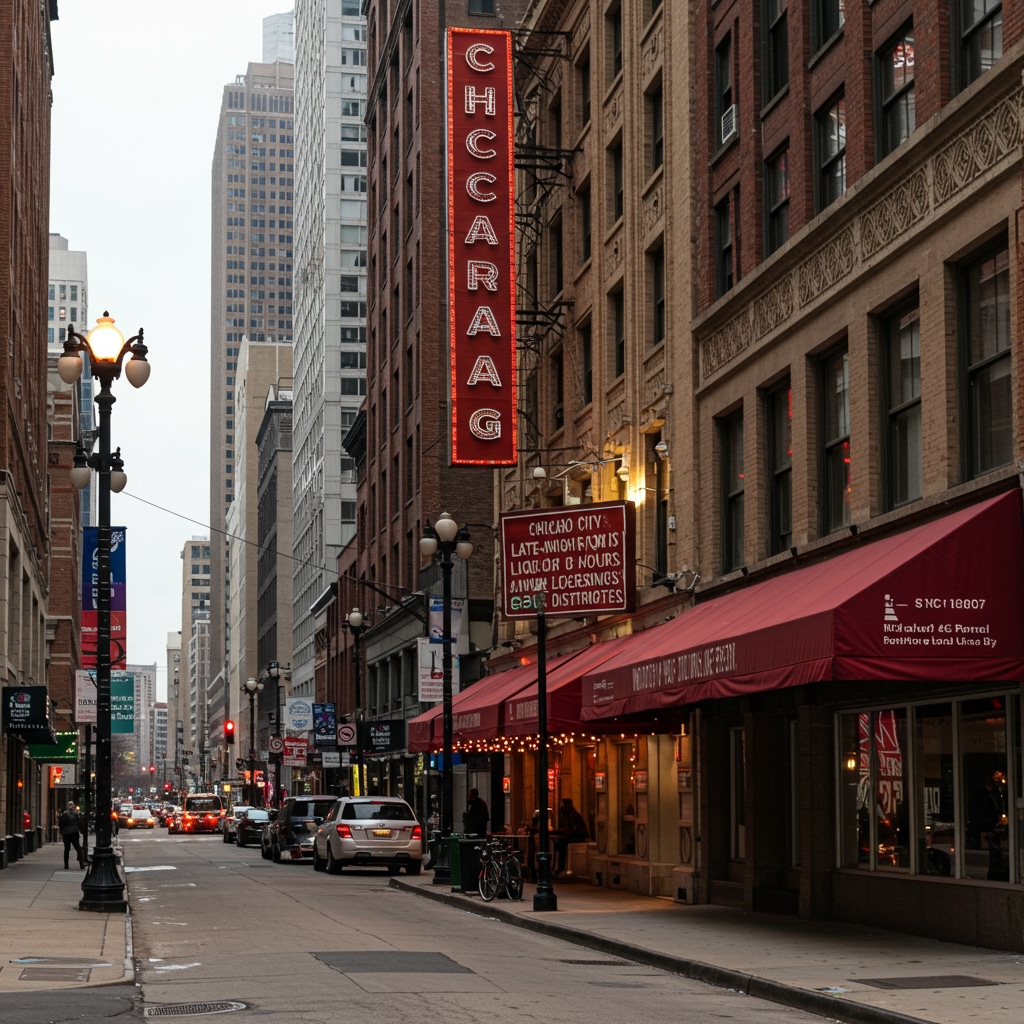
Chicago City Council Restricts Late Night Liquor Hours, Limits 4 AM Licenses to 15 Districts

Chicago City Council Restricts Late-Night Liquor Hours, Limits 4 AM Licenses to 15 Districts

April 24, 2025
Chicago City Council Committee Grapples with Contentious 4 AM Liquor License Reforms

Chicago City Council Committee Grapples with Contentious 4 AM Liquor License Reforms

April 22, 2025

Alderman John Chen played a significant role in the deliberation, contributing detailed inquiries and perspectives that reflected the diverse viewpoints within the council and the city itself. His input often focused on the practical implementation challenges and the potential unintended consequences of such a broad policy change. The committee’s discussion was characterized by a careful examination of the ordinance’s provisions and a search for potential modifications that could address the wide array of community and business interests.

Proposed Amendments and Stakeholder Input

A focal point of the committee’s review was the set of proposed amendments submitted by the Chicago Nightlife Coalition on April 19. These amendments represent a key effort by industry representatives to offer alternative frameworks that might mitigate potential negative impacts while still supporting the late-night business sector. Among the specific suggestions put forth by the Coalition were the implementation of a tiered permit system, which would potentially allow varying closing times or operational conditions based on factors such as location, size, or establishment type. This system aims to provide more flexibility than a one-size-fits-all approach.

Furthermore, the Chicago Nightlife Coalition’s proposal included a strong emphasis on mandatory noise abatement technologies and strategies. Recognizing that noise is a primary concern for residents, these suggestions focused on practical measures that establishments could be required to adopt, such as improved soundproofing, managed exit procedures, and engagement with community noise mitigation programs. These proposed amendments were presented as a means to foster a more harmonious coexistence between late-night venues and their neighbors.

Public Testimony Reveals Divided Opinions

The hearing included a lengthy and often impassioned public testimony period, providing a platform for those directly affected by the proposed changes to voice their perspectives. Numerous bar owners testified, many expressing support for extended hours as a crucial element for business survival and growth in a competitive market. They highlighted the potential for increased revenue, job creation, and the enhancement of Chicago’s reputation as a vibrant global city. Some business owners also spoke about the investments they were willing to make in soundproofing or security measures to be good neighbors.

Conversely, a significant number of residents from various neighborhoods presented compelling arguments against the 4 AM license extension. Their concerns centered on the potential for increased noise disturbances late into the night, late-night loitering, parking issues, and a potential decrease in overall neighborhood safety and tranquility. Residents shared personal anecdotes about past issues with late-night venues and urged the committee to prioritize quality of life over extended business hours. The testimony clearly illustrated the deep divisions within the city regarding Ordinance 2025-O-123.

Outcome and Next Steps

After several hours of deliberation and hearing public input, the Chicago City Council Licensing Committee concluded its session on April 22, 2025, without taking a final vote on Ordinance 2025-O-123 or the proposed amendments. The complexity of the issues raised, coupled with the differing viewpoints presented by stakeholders, led the committee to determine that additional deliberation was necessary before reaching a decision. Alderman Rodriguez indicated that the committee needed more time to carefully consider the feedback received and potentially refine the ordinance or its accompanying regulations.

The committee opted to schedule a follow-up hearing to continue the discussion. The next session is tentatively planned for the first week of May, allowing committee members time to review testimony, analyze the proposed tiered system and noise abatement suggestions, and potentially explore further compromises or modifications to the ordinance. The outcome of that future meeting will be critical in determining the fate of the proposed 4 AM liquor license plan and its potential impact on Chicago’s nightlife and residential communities.
liquorreform
FacebookX TwitterPinterestLinkedInTumblrRedditVKWhatsAppEmail

Tyreek Washington

Tyreek Washington is a music and tech writer from Chicago, whose early love for music drove him to self-teach technology skills so he could afford to make digital music. His journey led him to earn a programming degree and secure positions as a soundboard manager at prominent recording studios and music festivals, as well as a programmer for Amazon. Craving a shift from the corporate routine, Tyreek turned to journalism, where he now combines his self-taught tech savvy and profound musical knowledge to report on the latest trends and innovations in both fields. His articles, rich with insight and expertise, establish him as a respected voice in the music and technology industries, connecting deeply with his audience.

Federal Reserve Chair Powell Signals Potential June Rate Hike Amidst Persistent 3.9% Inflation
Chicago City Council Greenlights $10 Million Fund for Independent Restaurant Relief
Related posts
  • Related posts
  • More from author
Sip & Savor

Chicago St. Patrick’s Day 2026: 10 Best Ways to Celebrate

March 14, 20260
Sip & Savor

Chicago’s Hottest New Restaurants: The March 2026 Dining Guide

March 14, 20260
Sip & Savor

Trump Chicago Hotel Hits Crisis After Graphic Health Fail

March 13, 20260
Load more
Read also
Sound & Screen

Labrinth Blasts ‘Euphoria’ and Quits Industry in Viral Post

March 14, 20260
Headlines

Luka Magic: Doncic Dominates Bulls in Historic Record Run

March 14, 20260
Featured

Badgers vs. Michigan: Big Ten Semifinal Rematch Ignites!

March 14, 20260
Sports

Badgers Stun Illinois: The Tactical Switch That Won It

March 14, 20260
Sip & Savor

Chicago St. Patrick’s Day 2026: 10 Best Ways to Celebrate

March 14, 20260
Style & Innovation

China Warns US: Military AI May Trigger ‘Terminator’ Dystopia

March 14, 20260
Load more
Recent Posts
  • Labrinth Blasts ‘Euphoria’ and Quits Industry in Viral Post March 14, 2026
  • Luka Magic: Doncic Dominates Bulls in Historic Record Run March 14, 2026
  • Badgers vs. Michigan: Big Ten Semifinal Rematch Ignites! March 14, 2026
  • Badgers Stun Illinois: The Tactical Switch That Won It March 14, 2026
  • Chicago St. Patrick’s Day 2026: 10 Best Ways to Celebrate March 14, 2026

    # TRENDING

    chicago20252026aiFashionStreamingreviewaccountabilityinnovationfundingfestivalmusicnetflixalbumculinaryactionacquisitionnascarhululineup
    © 2024 All Rights Reserved by Chicago Today
    • Contact
    • Cookie Policy
    • Privacy Policy
    The Chicago Today
    Manage Consent
    To provide the best experiences, we use technologies like cookies to store and/or access device information. Consenting to these technologies will allow us to process data such as browsing behavior or unique IDs on this site. Not consenting or withdrawing consent, may adversely affect certain features and functions.
    Functional Always active
    The technical storage or access is strictly necessary for the legitimate purpose of enabling the use of a specific service explicitly requested by the subscriber or user, or for the sole purpose of carrying out the transmission of a communication over an electronic communications network.
    Preferences
    The technical storage or access is necessary for the legitimate purpose of storing preferences that are not requested by the subscriber or user.
    Statistics
    The technical storage or access that is used exclusively for statistical purposes. The technical storage or access that is used exclusively for anonymous statistical purposes. Without a subpoena, voluntary compliance on the part of your Internet Service Provider, or additional records from a third party, information stored or retrieved for this purpose alone cannot usually be used to identify you.
    Marketing
    The technical storage or access is required to create user profiles to send advertising, or to track the user on a website or across several websites for similar marketing purposes.
    Manage options Manage services Manage {vendor_count} vendors Read more about these purposes
    View preferences
    {title} {title} {title}